


Checked by hand
Analysts work through a list of sites one at a time, and the site nobody reached is where the change happened.
Needl.ai reads the regulator, ministry and legislature websites you cover every day, grades each new item high, medium or low against your own brief, and sends your team a daily brief, with an alert as soon as anything high priority lands. Every item links back to its source.
A consultation, a bill or a final rule lands on a website designed for a person with a browser. There is usually no feed, many notices are PDFs behind a landing page, and nothing tells you which of the day's items matters to your firm.
Analysts work through a list of sites one at a time, and the site nobody reached is where the change happened.
Until someone reads each item, a procedural notice and a binding rule look the same, so the day goes on sorting.
Each client or internal update is drafted by hand, with the authority, dates and applicability typed in again.
Needl.ai collects everything from the sources you cover, then decides what a person should read today, and applies that judgment the same way every day.
Each regulator site is checked automatically, whether or not it publishes a feed, including notices published as PDFs.
New items are classified as relevant or not, then as high, medium or low priority, with the reasoning kept.
Authority, jurisdiction, update type, effective date and applicability, or whichever fields your updates use, are extracted from the source.
A brief on your schedule, grouped by priority, and an alert the moment a high priority item matches.
How a watch moves through Needl.ai, from set-up to the brief your team reads.
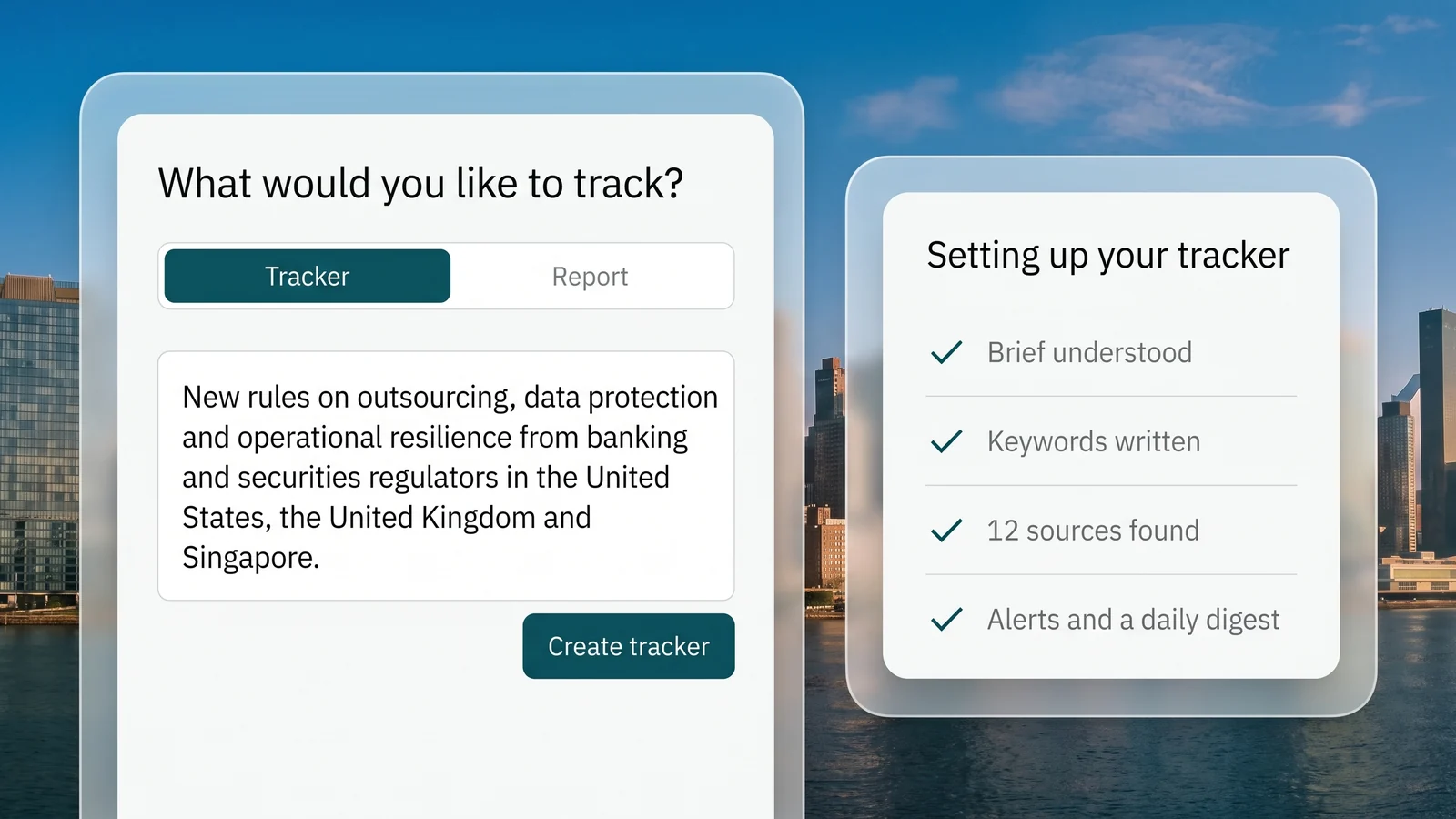
Write what your team needs to track in plain English, or start from a template. Needl.ai works out the keywords and finds the sources for it. A tracker sends alerts as items land and a digest on your schedule; a report is written on a schedule.
You getA tracker set up from one description.
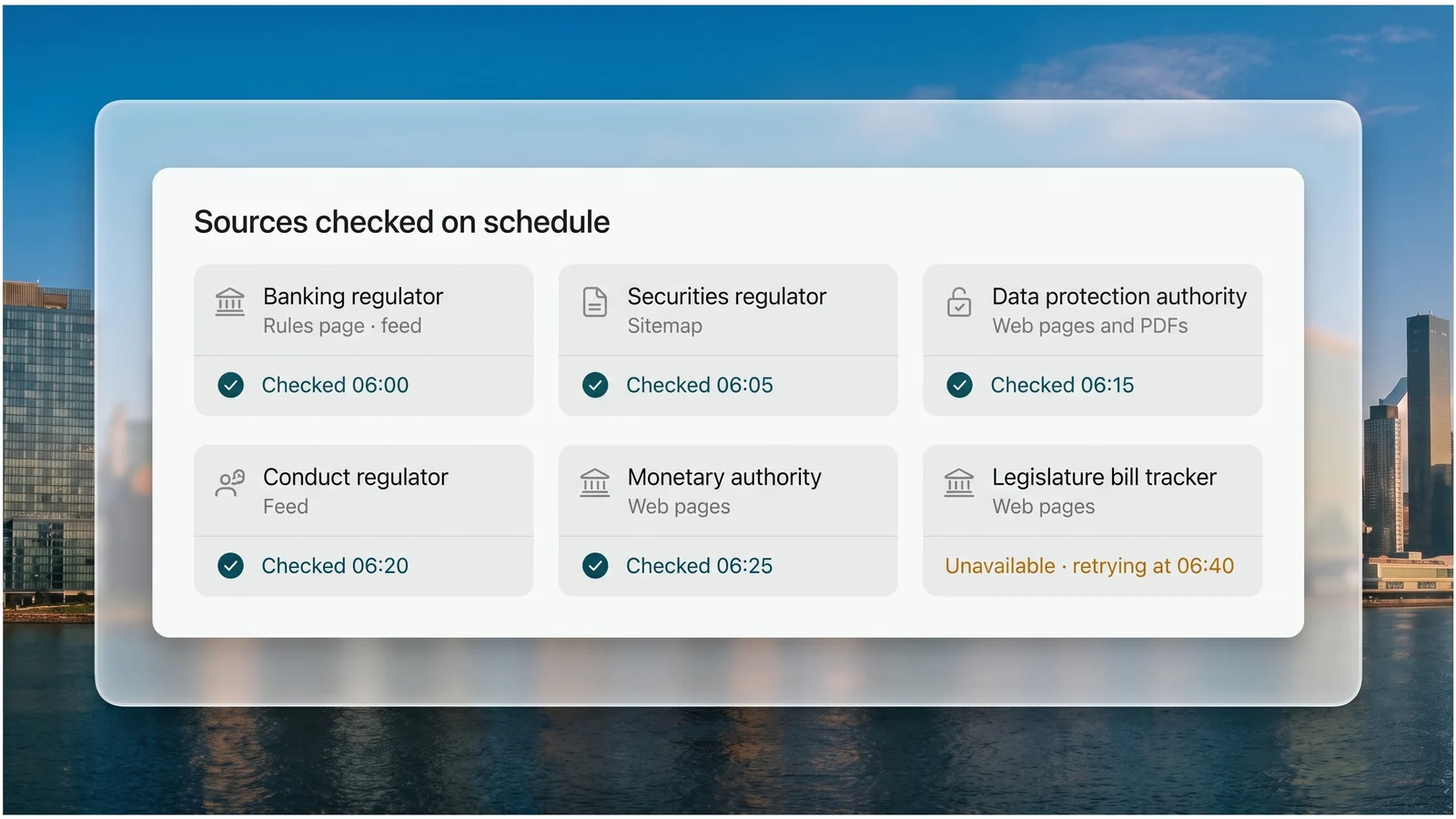
Each source is set up around the page that carries its new rules and checked on its own schedule, whether it publishes a feed, a sitemap or only web pages and PDFs. When a site is unavailable, the check is retried.
You getSites with and without feeds, watched alike.
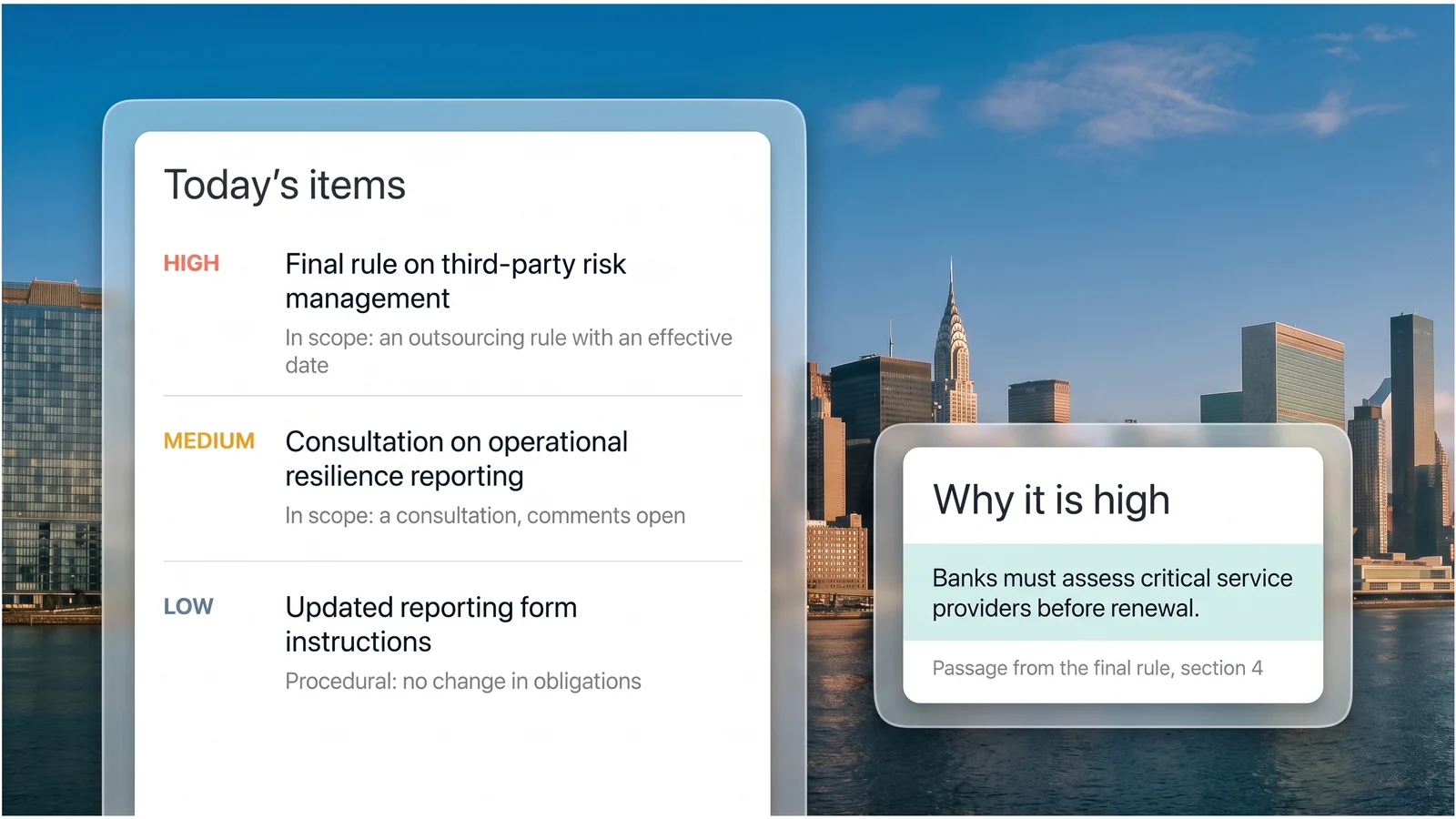
Your brief is turned into rules: what is in scope, what to exclude and what counts as high priority. Every new item is judged against them and graded high, medium or low, and the reason is kept with the passage it rests on.
You getThe day's items, sorted by what matters.
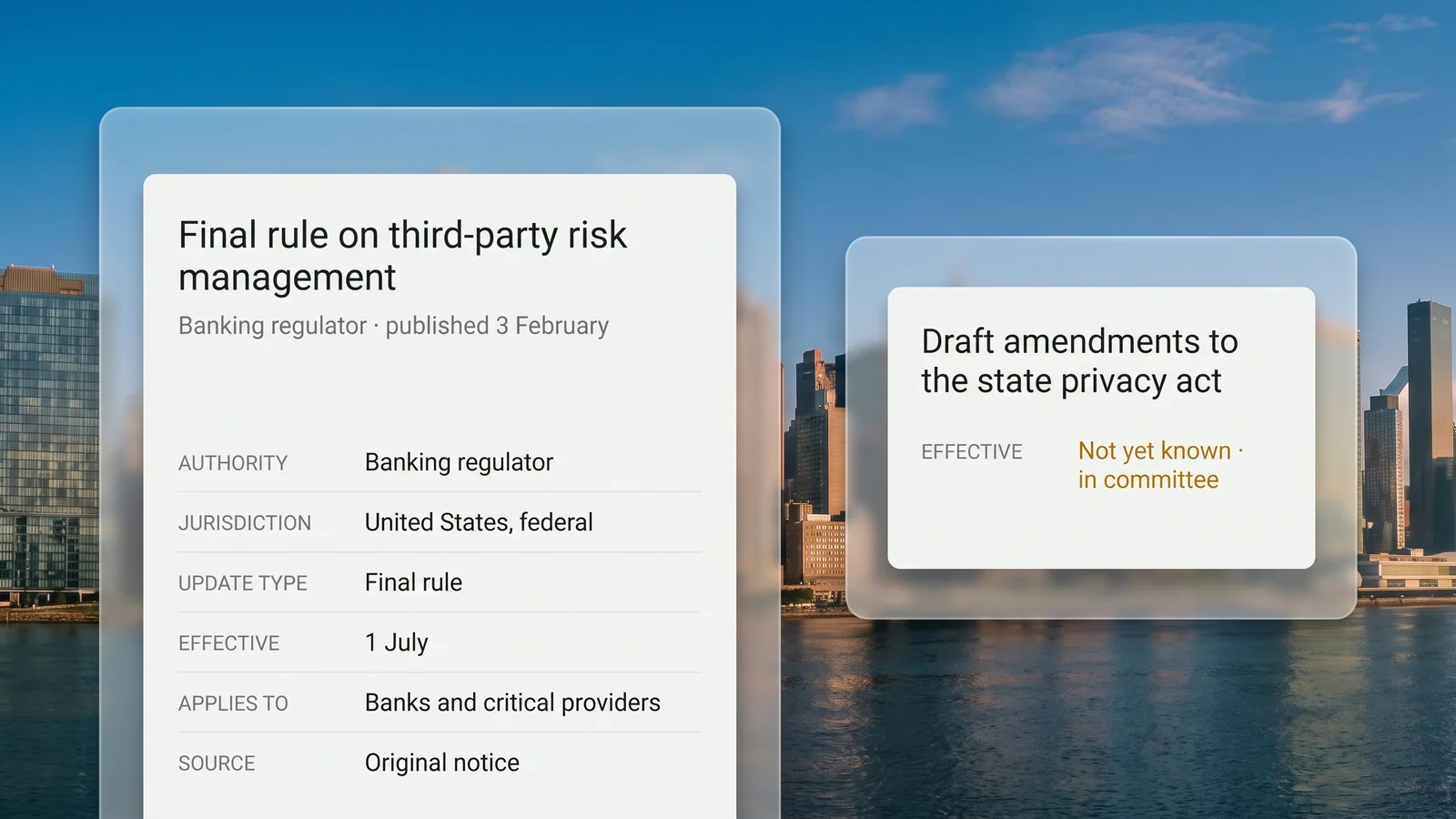
The fields your updates use, such as authority, jurisdiction, update type, effective date and applicability, are extracted from each item. When a value is not yet known, such as the effective date of a bill still in committee, the field says so.
You getThe facts of each change, ready to use.
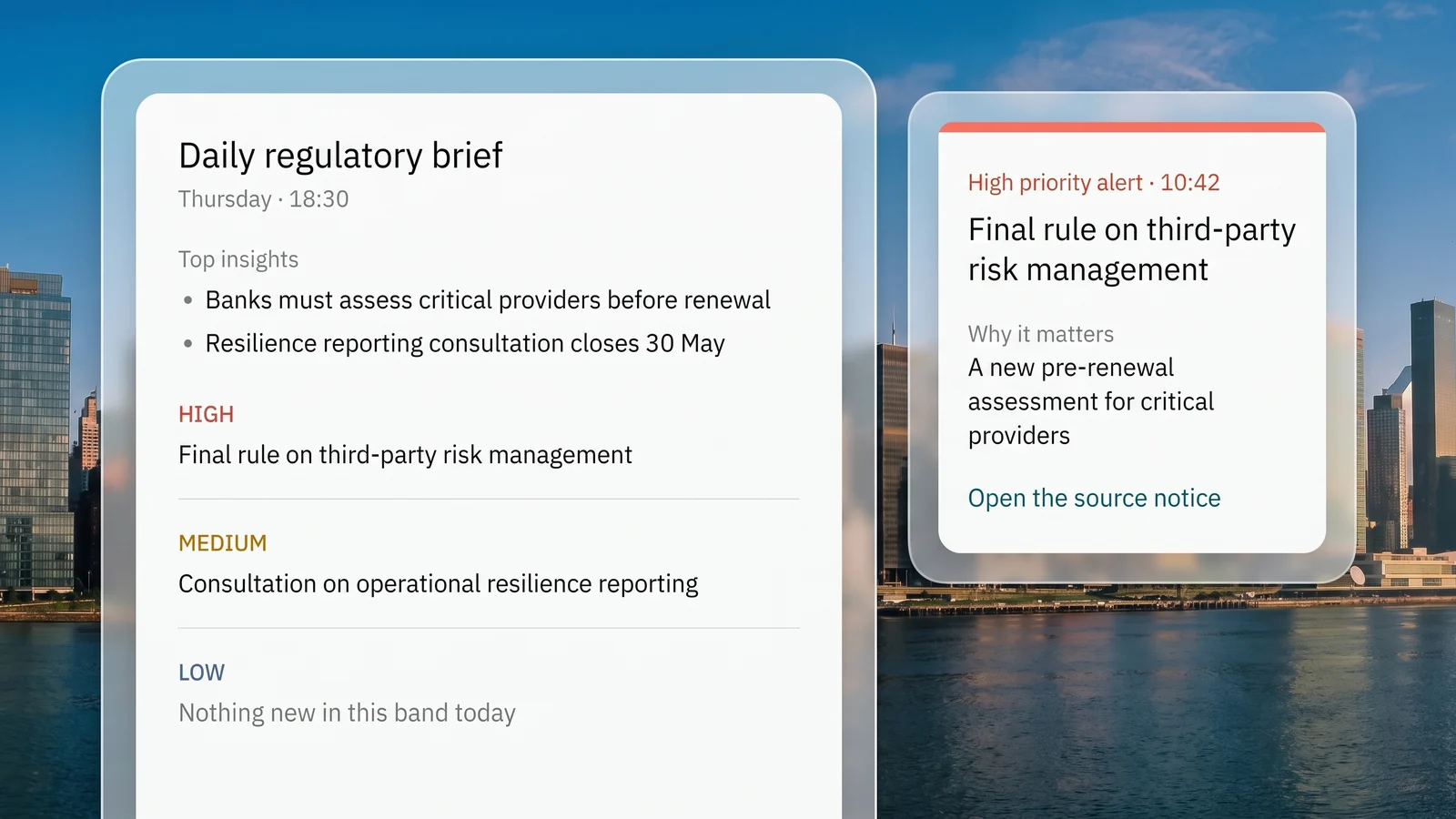
High priority items go out as an alert as soon as they are graded. The brief follows on your schedule, with the top insights first and then each priority band, and a band with nothing new says so. Every item carries why it matters and a link to the source.
You getA short daily read, with nothing urgent left waiting.
Every part of the watch follows your own brief, and every item keeps the trail back to its source.
Describe what to track in a sentence, or start from a template, and Needl.ai works out the keywords and sources.
Scope, exclusions and what counts as high priority come from your brief, with overrides for particular authorities.
The same change reported in several places appears once, and items merge only when a second check confirms they are the same event.
Notices in other languages are translated into English in full before they are graded, with the original a click away.
Exchange filings for the companies you follow are watched alongside regulators, each filing treated as its own event.
Publishers you do not want are excluded outright, before anything is graded.
An item that cannot be graded is held back with a reason, so every item that reaches you carries its priority.
Each item links to the notice it came from, and the grade keeps the passage it rests on.
Instant alerts for high priority, a digest on your schedule, or a fully sourced research report, delivered by email.
“Most tools flood you with thousands of keyword alerts. Needl.ai cuts through the noise with relevant, classified alerts mapped to the things we are actually accountable for.”
Needl.ai can be deployed in your own AWS or Azure account, in your region, with your watches, briefs and alerts stored there. You can also start in Needl.ai's cloud and move later.
 AICPA SOC 2
 ISO 27001 certified
 ISO 42001 in progress
 GDPR compliant
 CASA assessed
What compliance teams ask before putting a regulatory watch on Needl.ai.
Regulators, ministries, supervisors and legislatures, whether they publish a feed, a sitemap or only web pages and PDFs, as well as exchange filings for the companies you follow. Sites behind a login can be included where your firm has access.
Your brief is turned into rules: what is in scope, what to exclude and what counts as high, medium or low, with overrides for particular authorities. Each item is graded against those rules, and the reason is kept with the passage it rests on.
Yes. Relevant items are delivered in their band, high, medium or low. Only items outside the scope you described are left out.
Sites without feeds are read directly on a schedule, including notices published as PDFs. When a site is unavailable, the check is retried.
Keyword alerts send everything that matches. Needl.ai reads each item, decides whether it matters to you and how much, and extracts the facts an update needs, so the team reads a short brief instead of a long feed.
In your own AWS or Azure account, in your region, or in Needl.ai's cloud to start. Briefs and alerts are delivered to your team by email.
Send us the regulators and legislatures you cover, and we will set up a watch so your team can judge a week of briefs and alerts for itself.